The Problem
Squeegees are useful, but they're ugly.
Most people don't dislike using a squeegee. They dislike looking at one.
Traditional squeegees feel like cleaning tools, so they get hidden away, hung awkwardly on hooks, or left cluttering the shower.
The opportunity isn't to make a better squeegee.
It's to create a shower tool that deserves to be displayed.
—
A Luxury Shower Tool
The Idea
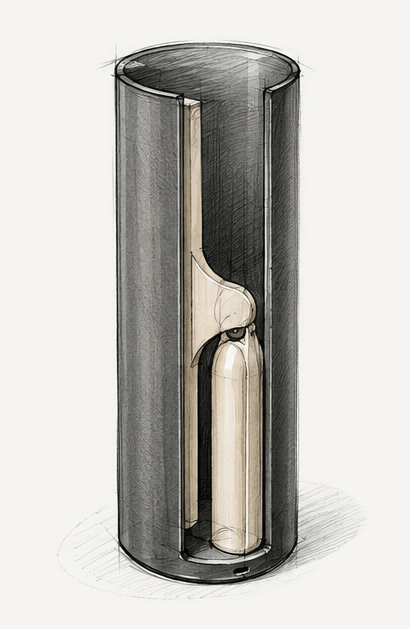
A luxury shower tool that docks inside a sculptural vessel.
The folded squeegee slides inside a beautiful bathroom object that permanently lives on the shower shelf alongside premium products such as Aesop and Le Labo.
When stored, it doesn't look like a cleaning tool. It looks like part of the bathroom.
—
User Experience
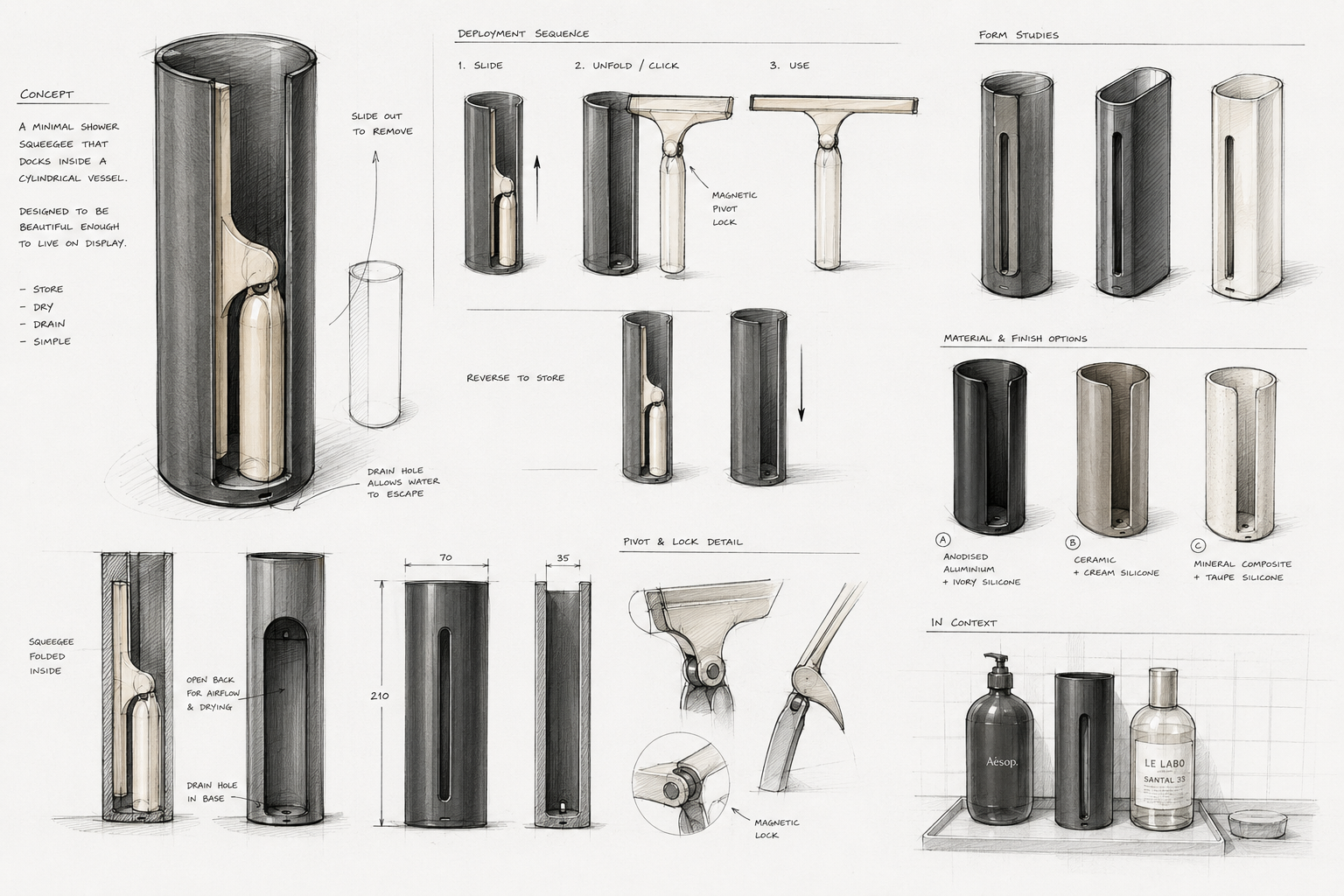
Pull → Open → Use → Close → Store
Pull the folded tool from the vessel.
Unfold the blade until it clicks into place.
Use after showering.
Fold closed.
Slide back into the vessel.
Simple. Fast. Intuitive.
The Docking Vessel
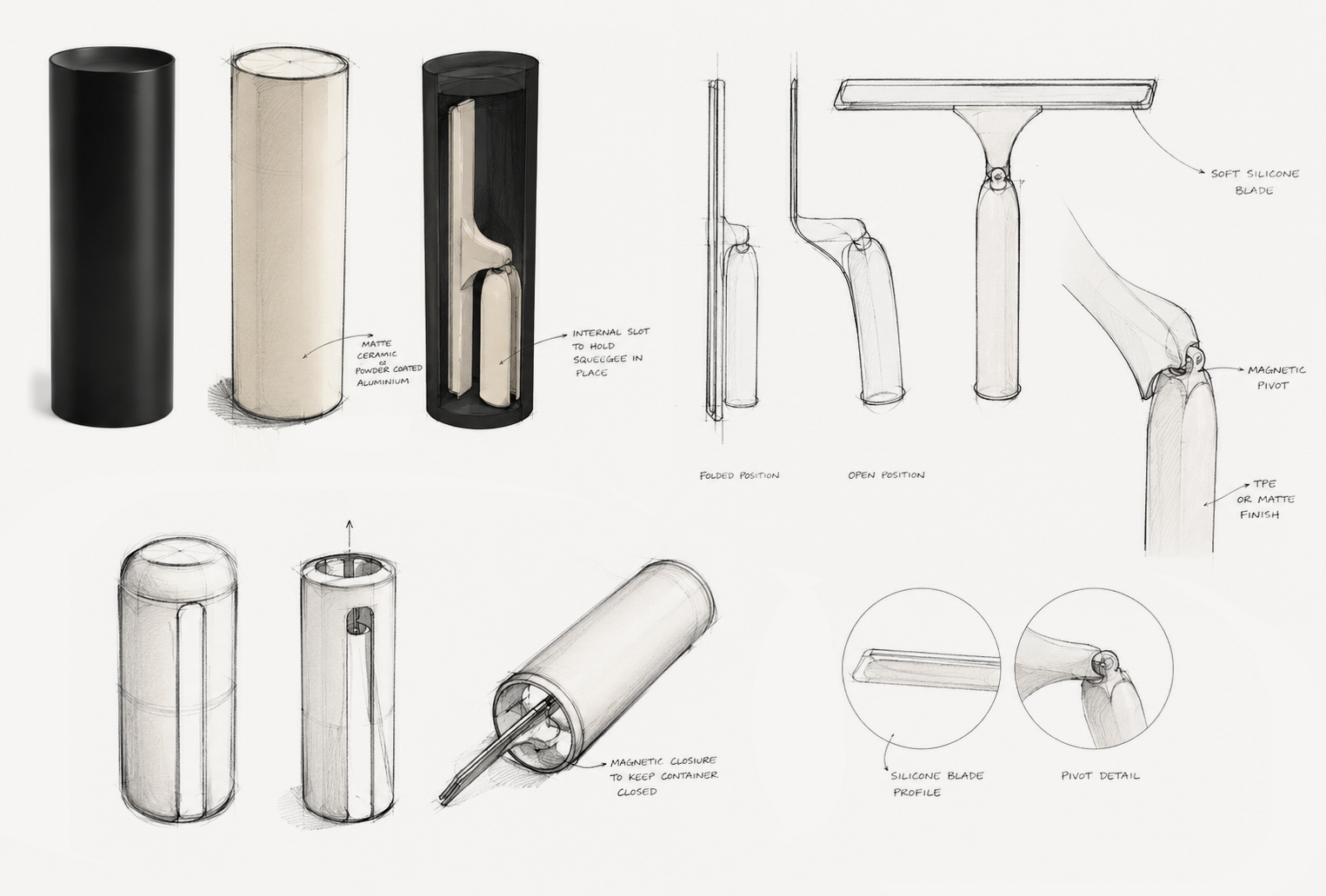
The vessel is not a container.
It is a docking station.
The folded tool slides in and out without a lid.
Benefits:
Fewer parts
Lower manufacturing complexity
Faster user interaction
Easier cleaning
Better long-term durability
The rear remains open for airflow and drying.
A drainage hole in the base allows water to escape.
—
Design Direction
The goal is not to design a beautiful squeegee.
The goal is to design a beautiful bathroom object.
The product should feel at home beside:
Aesop
Le Labo
Luxury hotel amenities
Premium bathroom accessories
The product competes with beautiful objects, not cleaning tools.
—
Form Language
If the folded tool remains flat, the vessel can become a refined oval rather than a large cylinder.
Benefits:
Reduced visual bulk
Smaller footprint
More premium appearance
Better shelf integration
The vessel becomes a quiet architectural object.
—
The Most Important Design Moment
Not the hinge.
Not the vessel.
The opening action.
The moment the blade deploys and locks into position.
This should feel:
Precise
Satisfying
Effortless
Premium
Think:
Apple MagSafe
Leica lens mechanisms
High-end camera controls
Jony Ive's obsession with interaction design
A beautiful deployment experience encourages daily use.
Potential Value
What becomes valuable is not simply the idea of a squeegee.
Potential intellectual property may exist in:
The folding mechanism
The docking system
The drainage solution
The locking action
The industrial design
The user experience
The brand and positioning
Together these create a unique product concept rather than a generic cleaning accessory.
—
Core Insight
"I don't want to look at a squeegee."
That is the design brief.
This is not solving a cleaning problem.
It is solving an aesthetic problem.
And aesthetic problems are where premium brands are often created.
Examples:
Dyson
Aesop
Le Labo
Muji
—
Working Names
Current favourites:
Veil
Fold
Vero
Noma
—
Next Steps
1. The Dock
Keep refining the vessel.
I suspect the vessel may ultimately become more iconic than the squeegee itself.
Ask: Would I leave this on display even if nobody knew what it was?
If yes, you're getting close.
2. The Deployment Experience
Build crude prototypes immediately.
Don't worry about appearance.
Test:
Pull → Open → Click over and over.
The feeling should be addictive.
3. The Brand
Don't call it a squeegee.
Not yet.
Treat it like Dyson treated the Airblade or Apple treated AirPods.
People discover what it is after they encounter it.
Then…
The product category can come later.
Conduct a deeper market and patent search.
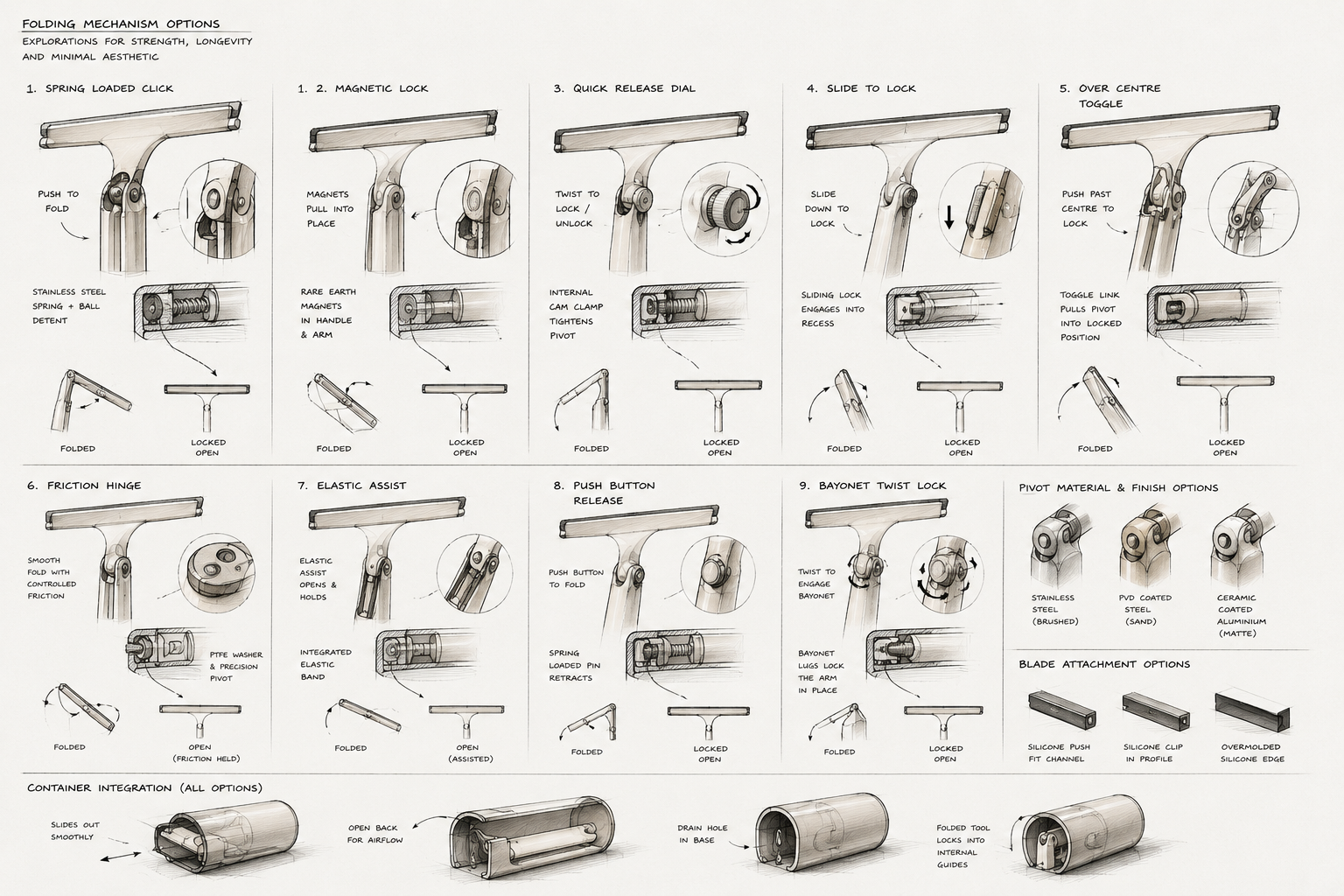
Explore 5–10 folding and locking mechanisms.
Create rough prototypes.
Test deployment speed and satisfaction.
Investigate design registration, trademarks and patent opportunities.
The success of the product will not come from the idea alone.
It will come from the quality of execution and the experience of using it.